All info about Bell-shaped flowers
Bell-shaped flowers
Looking for something beautiful to add to your garden? Check out these bell-shaped flowers! They are sure to add a touch of beauty and style. These flowers look like bells, hence the name, and they come in a variety of colors. Whether you’re looking for something subtle or glamorous, these flowers have you covered. So why not add them to your garden today?
The items listed contain affiliate links, meaning I earn a small commission if a purchase is made through my links. This has no cost impact on consumers. I link to products in this way whenever possible, and this has no influence on the products I choose to review or recommend.
Bell-shaped flowers make an interesting addition to any garden. The unique shape of the flowers can come in virtually any color depending on the species, all exhibiting the bell-like shape of the drooping petals.
In most cases, bell-shaped flowers are planted as ornamentals, making them ideal for hanging baskets and borders alike. Bell-shaped flowers are also generally easy to grow and maintain, with most species simply enjoying full sunlight and moist, well-drained soil.
Whether you want to expand your garden to expand your knowledge of flowers, you’ve come to the right place. Here’s our guide to 14 bell-shaped flowers for your garden!
Bellflower, (genus Campanula), is any of about 420 annual, perennial, and biennial herbs that make up the genus Campanula (family Campanulaceae). Bellflowers have characteristic bell-shaped, usually blue flowers, and many are cultivated as garden ornaments. They are mainly natives of northern temperate regions, Mediterranean regions, and tropical mountains. Bell-shaped flowering plants are colorful, bright, sun- or shade-loving garden varieties that give off beautiful fragrances. The usually bell-shaped flowers grow in drooping conical clusters and can be white, purple, pink, or red. Some examples of these flower clusters are dog hobble and Japanese Pieris. However, other bell-shaped flowers such as snowdrops, bluebells, and lilies of the valley grow on straight or arching stems on low-growing plants.
The bell-shaped flowers look like small urns or small inverted cups. Some flowers that look like bells have an open shape with pointed petals. But there are also showy flowers in the form of bells that grow tall and look like champagne flutes or funnels. The tall bellflower, or American bellflower (Campanula americana, formerly Campanolastrum americanum), is found in moist forests of North America and has racemes of saucer-shaped flowers up to 2 m (6 ft) tall. can reach.
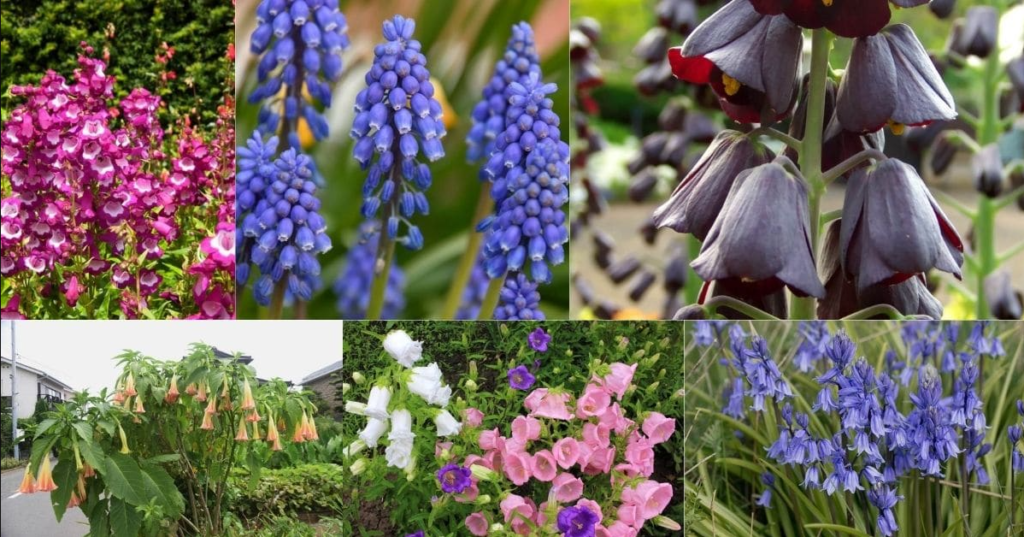
If you want to create a stunning, imaginative garden, you should look into bell-shaped flowers. They make such a wonderful addition not only to flower gardens but also to hanging baskets and containers. These beautiful flowers are actually bell-shaped, hence their name. Bell-shaped flowers just brighten up your garden and breathe life into it. There are many incredible varieties of vine flowers. Here are some of the most beautiful bell-shaped flowers. Long curved style. Tussock bellflower, or Carpathian harebell (C. Carpathia), has lavender to white cup-shaped, long-stalked flowers and forms in clusters in eastern European meadows and forests. Fairy thimbles (C. cochleariifolia), named for their deep nodding blue to white bells, form loose open mats on alpine screes. Star of Bethlehem (C. isophylla), an old Italian species are often grown as a container plant, This article is a guide to identifying spectacular varieties of bell-shaped flowering plants. Some plants with bell-like flowers, such as snowdrops or bluebells, are easy to identify. However, the clusters of white bell-shaped flowers can belong to many plant species.
Why plant vine-shaped flowers?
They are beautiful. The simple bell shape is appealing to the eye, as are the curved stems from which some bell-shaped flowers hang.
They add different textures and shapes to offset other flowers. Combine them with a variety of flowers to add more interest to your garden beds.
They come in many different colors. The variety of colors means there is something to suit any space in your garden.
They look great wherever you put them. Bell-shaped flowers are beautiful in garden beds as well as in pots.
Bell-shaped flowers to make a splash
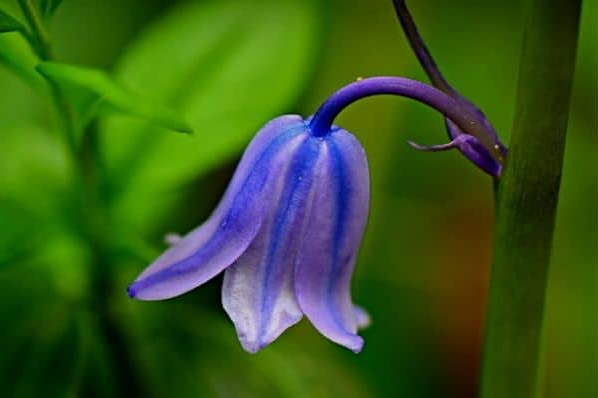
Bell-shaped flowers are trendy because they are known for their beauty, colors, and variations. These flowers are common in many parts of the world including America. Flowers that look like inverted bells add a sense of excitement to the viewer and can add a stunning look to any garden. These beautiful flowers can be used for many purposes such as decoration, use in weddings, making wreaths, and beautiful gifts. Looking for bell-shaped flowers to add some bright color to your flower garden?
In this guide, we’ll introduce you to the wide variety of bell-shaped flowers that you can plant.
But first, let’s briefly go over some of the reasons why you might want to plant beautiful bell-shaped flowers.
Bell-shaped flowers
Here in the world of flowers, there is a collection of bell-shaped, trumpet-shaped, tubular or cup-shaped flowers.
Flowers that look like bells are also found in some wild areas, and some grow in their gardens. Green, blue, purple, white, pink, and many other colors, these bell-like flowers appear on a variety of plants, including some trees.
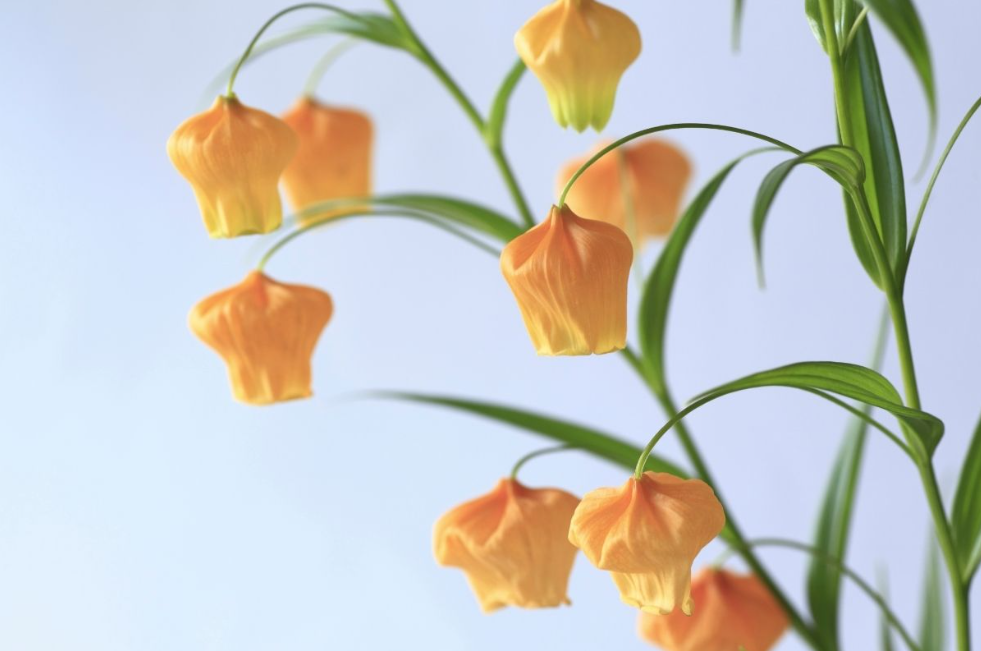
Best plants with flowers that look like bells.
The most easily recognizable bell-shaped flowers are white blooms such as lily of the valley, snow drop, and Japanese pear. The tallest plants with bell-shaped flowers are foxgloves, which have large, colorful thumb-shaped flowers borne on erect inflorescences. There are sprays of star-shaped violet, blue or white flowers. Canterbury vine (C. medium), a southern European biennial, has large pink, blue, or white spikes of cup-shaped flowers. Peach-leaved bellflower (C. persicifolia), found in Eurasian forests and grasslands, produces slender-stemmed spikes, 30 to 90 cm (12 to 35 in) tall, with long stalks. External facing bells. Rampion (C. rapunculus) is a Eurasian and North African biennial grown for its turnip-like roots and leaves, which are eaten in salads for their bite. Other bell-shaped spikes include Canterbury bells, dogwood, coral bells, and fuchsia.
Plants with white bell-shaped flowers
Plants with white bell-shaped flowers are very common. These cup-shaped flowers are found on snowdrops, mountain heather, lily of the valley, dogwood, and Japanese pear. Let’s take a closer look at some of the most common plants with white bell-shaped flowers. It produces growing clusters of long-stemmed panicle bells and has basal, broadly ovate leaves that form a rosette around the stalk. The rover, or creeping, bellflower (C. rapunculoides) is a European plant that has naturalized in North America and is named for its spreading rhizomes. Throatwort, or bat-inside belfry (C. trachelium), a thick, erect, hairy Eurasian plant that has also naturalized in North America, has clusters of lilac-colored leathery flowers. Other cultivated Campanula species from Europe include Adria bellflower (C. garganica, sometimes classified as a variety of C. elatines). There is something very unique about bellflowers, especially the way they droop downward as if hiding or shying away from something. Not only that, but they are incredibly delicate and will add beauty to your garden. So, to help you grow bell-shaped flowers in your outdoor space, take a look at some beautiful varieties of bell flowers that will really blow your mind. Clustered Bellflower (C. glomerata); milky bellflower (C. lactiflora); Great Bellflower (C. latifolia); and C. zoysii. See also harebell.
Venus flytrap. Venus’s-flytrap (Dionaea muscipula) is one of the most popular carnivorous plants. Carnivorous plant, Venus fly trap, Venus fly trap Plants: From cute to carnivorous
You may know that rice is the seed of a plant, but what is the oldest plant in the world? What type of plant can be an annual, biennial, or perennial?
Lily of the Valley (Convallaria majalis)
Lily of the valley has white bell flowers that grow singly or in pairs on short green stems. Sweet-scented nodding cup-like white flowers bloom in mid to late spring. The bright white bell flowers contrast with the bright foliage of the low-growing plant. Lily of the valley is 6″ to 12″ (15 – 30 cm) tall.
Lily of the valley has white bell-shaped flowers that consist of six fused sepals that form a rounded cup shape. These delicate flowers are known for their fragrant fragrance when they bloom. As a spreading, low-growing plant, the lily of the valley is ideal for use as a ground cover with white flowers. Lily of the Valley is a perennial plant grown in Asda Zones 2 to 7 and does best in shade-dappled Sunlight. The Lily of the valley is a bell-shaped flower native to Europe and Asia. It is one of the most popular flowers in the world and is known for its sweet fragrance. Lily of the valley comes in pink or white bell-shaped flowers.
This flower is poisonous, be careful if you have pets or small children. It is best to plant them in an area where they are not easily accessible. It is considered an invasive plant in some areas, so be sure to check your local laws before planting. Also, the lily of the valley is a relatively easy plant to care for. It prefers partial shade and moist soil.
In fall, you can plant lily of the valley from root cuttings, potted nursery plants, or seeds. Lily of the valley makes a beautiful, fragrant, ground cover in shady areas and under trees.
Lily of the valley is another classic bell-shaped flower to consider adding to your garden. Its scientific name is Convallaria majalis.
Related reading
44 House Plants You Can Propagate From Cuttings
Although “lily of the valley” is the most common name used to refer to it, you may also hear it called “Mary bells,” “Mary’s tears” or “Our Lady’s tears.” Some names that are now largely defunct include Glover and Apollinaris.
Despite the name, it is not actually a type of lily. It is related to asparagus. As a perennial flower that grows in woodlands, it is an excellent choice for partial shade. It can reach anywhere from 6-12 inches tall when fully grown.
Lily of the valley produces its flowers in spring, delicate bell-shaped pendants that dangle from its stems.
Blooms with all-white petals are most common, but on rare occasions, you may see pink flowers.
- Zones: 3-7
- Sun: Partial
- Water: Water as needed for moist soil
- Soil: Loamy, sandy
Forsythia
Often called the harbinger of spring, the forsythia blooms in bright yellow flowers before its leaves emerge. This creates golden dots in the landscape that break up the gloomy, icy ground with promise to come. Flowers are produced in early spring, before the leaves appear, to welcome the vibrant yellow flowers.
Why Plant Lily of the Valley in Your Garden?
This is a relatively pest resistant type of flower which makes for easy maintenance.
Lily of the valley has a distinctive shape. It is not a flower that you can easily confuse with another. While the white bells are small, they are easily distinguished from the surrounding green plants.
Lily of the valley do well if you have a woodland garden. It will be happy in partial shade.
Clarkia
per annum
Clarkia amoena, also known as the satin flower, is native to western North America from central California to British Columbia. The four-petaled flowers (2 to 3 inches in diameter) are red, pink, or lavender, sometimes with a spot or spot at the base of each petal.
Amaryllis
The beautiful amaryllis flower, often given at Christmas, is often seen as a symbol of festive cheer. Although this is true, this flower has many other meanings. The amaryllis flower is available in a variety of colors, including purple, orange, white, yellow and red.
Casa Blanca
Perennial
Casablanca flowers are mainly white to pink to purplish red with some golden yellow. Their middle composition blends with the garden. Casablanca is a genus of about 100 species of herbs and bulbous perennials native to South America, North America, and Europe.
Crocus
Arbutus
Shrubs/trees
Arbutus is a genus of 12 species of flowering plants recognized in the Ericaceae family, native to temperate regions of North America, Western Europe, the Mediterranean and the Canary Islands. Arbutus species are characterized by typically bell-shaped pink or white flowers borne in loose terminal racemes and fleshy orange or red berries with a markedly irregular surface.
Snowdrops (Galanthus nivalis)
Snowdrops are cold hardy bulbous perennials with bell-shaped white flowers
Snowdrops are early blooming plants that produce white bell-shaped flowers in late winter or early spring. Flowering plants that spread over the ground form a carpet of white flowers. Cold-hardy plants can also grow under the ice sheet. The drooping white flowers usually grow singly at the ends of short arching stems. Bell-shaped snowdrops are usually small, stirring white flowers. Some snowdrop hybrids have white flowers that are double flowers with several inner petals. Others are simple bell-shaped flowers made up of several fused petals.
Snowdrops do well in USDA zones 3 through 8 and need shade or partial sun. Small plants only grow around 10” (25 cm), making them great groundcover plants for full shade. Snowdrops are deceptively hard for a plant and flower that looks so fragile.
Another perennial bell-shaped flower that you can enjoy in your garden is the snowdrop.
Snowdrops are flowers of the Galanthus genus. There are around 20 of them in total.
The plant gets its name from its unusual bloom period, which occurs in winter (usually — you can also see them blooming in fall or spring).
The name also refers to its appearance, its small, white, bell-shaped flowers that fall like snowflakes.
- Zones: 3-7
- Listen: Full to Part
- Water: To keep water abundant
- Soul: Rich, most abundant, willingly excreting
Why plant snowdrops in your garden?
Enjoy the flowers in winter. There are not many flowers that bloom especially in winter. But while the rest of your flowers are dormant, you can wait for the snowdrops to fully bloom.
These plants can tolerate low light conditions. This means that they can grow well in a shade garden, and can also thrive when the sun is behind winter clouds.
Snowdrops withstand harsh weather. In fact, they can bloom even when surrounded by snow and ice.
Mandrake
Perennial
Also known as the devil’s apple, long absent from American pleasure gardens, the mandrake (Mandragora officinarum) is making a comeback thanks to the Harry Potter movies and books. The solitary flowers have a bell-shaped crown of 5 petals, and vary in color from purple to greenish-yellow. Flowers bloom in the center of the plant in spring.
Cultivars to consider
Galanthus nivalis: You will usually see this type of snowdrop in flower. in February. As one of the most common types, it’s likely the first crop you think of when you think of snowdrops.
Galanthus nivalis f. pleniflorus ‘Flore Pleno’: This snowdrop has an unusual shape thanks to its double shape. It opens wide, making it easy to see both the inner and outer petals.
Bill Clark: While most types of snowflakes are white, some are yellow. An example is Bill Clark. In fact, you’ll find yourself thinking of them more as “snowdrops” in the snow.
Green tears: The petals of this flower are green in color.
Ardisia
Shrubs/trees
Ardisia (marlberry or coralberry) is a genus of plants in the Primulaceae family. It was part of the ancient Myrsinaceae family, now known as the Myrsine family. The Ardisia genus includes over 700 recognized species of flowering plants. Typically, the flowers have a bell-shaped crown of 4 or 5 green sepals and 4 or 5 pink or white petals.
Colchicum
Colchicum, a genus of flowering plants in the family Colchicaceae, contains about 30 species of herbs native to Eurasia. Stemless, crocus-like flowers bloom in autumn, and some are variously called autumn crocus and meadow saffron. The fruit is a three-valved capsule that ripens in spring when the leaves appear. In some species the leaves emerge from the ground with the flowers in autumn. Cultivated as Ornamental for their pink, white, or blue-purple tube-shaped flowers, especially C. autumnale, C. bornmuelleri, and C. speciosum. The swollen underground stem of C. autumnale contains colchicine, a substance used to relieve gout pain.several species.
Balloon flower
Perennial
Commonly known as blue balloon flower, Japanese snowdrop, Chinese snowdrop, Chinese bellflower, and Korean snowdrop, balloonflower is a flowering perennial in the Campanulaceae family, which includes lobelia and wood hyacinth. , and is the only member of the Platycodon genus.
bellflower-campanula
The bellflower, or campanula, is a bell-shaped flower native to Europe and Asia. There are more than 300 species of bellflowers, and they come in a variety of colors but are most famous for their blue and purple bell-shaped flowers.
Bellflowers are relatively easy to grow and make a beautiful addition to any garden. They prefer full sun and well-drained soil.
In June and July, bellflowers will be in full bloom, but they can grace you with flowers in certain areas in October. They can be grown from seed, but can also be propagated by root division in the spring.
With a little care, bellflowers will reward you with beautiful blooms for many summers to come.
Also called bellflowers, campanulas have characteristic large bell-shaped purple flowers. The five-lobed corolla (petal or modified leaf) forms a cup shape to give the flower its distinctive shape. Each flower is 0.8 to 2 inches (2 to 5 cm) long. Although bellflowers are usually purple in color, they can also be pink or white.
The botanical name Campanula also refers to the distinctive bell shape of the flowers. In Latin, the plant’s name means “little bell.” There are over 500 species of Campanula plants. They range in size from dwarf alpine species 2 inches (5 cm) tall to large plants reaching 6.5 feet (2 m) tall. Along with bell-shaped pink, white, and purple flowers, campanulas also have tubular, cup-shaped, and umbrella-shaped flowers.
Bells of Ireland
Despite their names, these wonderful bell-shaped vegetables are native to the regions of Turkey, Syria, and the Caucasus. They have a fragrance that many cannot describe. The thing about the bulls of Ireland is that they can be so tall.
Grape Hyacinth
Grape hyacinths are beautiful mini hyacinths that are perfect for growing in front of tall flowers.
They are hardy, drought tolerant and will come back year after year.
Grape hyacinth flowers are usually blue or purple, but you can also find white and pink varieties. Grape hyacinth is easy to identify because of the deep blue or purple bell-shaped flowers that grow in clusters at the end of the stems. The tubular, oval flowers resemble small inverted bunches of purple-blue grapes. The bulbous plant produces a 4″ to 8″ (10 – 20 cm) flower stalk with up to 40 tightly packed urn-shaped flowers on each.
Because of its low-growing nature, grape hyacinth is an ideal plant for borders, paths, or front beds. They are also perfect container plants.
You can grow grape hyacinth in USDA zones 3 through 9. The bulbs produce flower stalks and leaves in early spring, then die back in summer. They then re-emerge in mid-autumn and persist through winter.
Plants with red bell-shaped flowers
Plants with red flowers that look like little bells help add a vibrant pop of color to the garden landscape. Please read on to discover the three best varieties of plants with red bell-shaped flowers.
Bindweed
Perennial
Bindweed (Convolvulus arvensis) is a perennial herbaceous climber from Eurasia. This plant is found in most areas where it was accidentally introduced as a contaminant in horticultural and agricultural seeds.
Persian Lily (Fritillaria persica)
Among the most unusual bell-shaped purple flowers is the Persian lily. The stunning nodding flowers are usually a deep, plum-purple color, which makes them appear like black flowers. The downward-sloping flowers are open bell-shaped, and they grow up to 4 feet (1.2 m) tall on the stem.
Deep purple Persian lily flowers can bloom in stunning ivory white or green shades. Flowering plants thrive in USDA zones 4 through 8 and do best in full sun and well-drained soil. The best way to grow Persian lilies is to collect them in beds or borders.
Canterbury Bells (Gloxinia perennis)
Canterbury bell plants have easily recognizable lilac flowers that are shaped like ornamental bells. Light purple or lavender flowers have a tubular body and a large recurved rim. Each charming bell flower is about 1.5 inches (4 cm) long and fragrant.
Canterbury bells are also known as bellflowers, but should not be confused with plants of the Campanula genus. The bell-shaped purple flowers grow on upright stems 2 to 4 feet (0.6 – 1.2 m) tall. These yellow-purple flowers bloom from summer to late fall. Purple is the most common color of the pollinator-loving Canterbury bells, but they also come in colors ranging from white and pink.
A variety of bell-shaped flowers to consider planting is the campanula flower, known as “Canterbury bells.” Its full scientific name is Campanula medium.
Canterbury bells can be either biennial or annual. Its maximum height is between 60 and 80 cm.
In terms of appearance, Canterbury bells form large clusters of bell-shaped flowers. Each of these clusters is known as a “blossom”.
Calibrachoa
Calibrachoa is sometimes seen adorning cascading planters or hanging baskets and other containers, a tough and delicate flower. It is not the most popular choice in terms of formal arrangements and bouquets. Yet, when presented as a houseplant, the Calibrachoa is a flower with deep symbolism for its recipient.
Canterbury Bells
Two years
With their large, bell-shaped flowers, Canterbury bells are a delightful addition to cottage gardens and landscaped gardens. Canterbury bells (Campanula medium) originate from southern Europe but have been in many gardens since the 16th century.
Bluebill
Bluebill is a purple plant with bell-shaped purple to lilac flowers. Spring-blooming flowers are 1″ (2.5 cm) tall and have a bulbous base, narrow open tip, and recurved tips that may be creamy white. Clematis pachiri 10 to 13 ft (3 – 4 m). Grows tall and up to 3 feet (1 meter) wide.
One of the attractive features of Clematis pitcheri is its long blooming season. The bell-shaped purple flowers appear in late spring and bloom profusely summer through fall. Bluebill thrives in USDA zones 5 through 9 in full sun and well-drained soil. Its tolerance for poor soil types makes it an ideal vining plant for sandy or rocky soils. The majority of Canterbury bells have purple blooms. But along with purple colors, these flowers also come in pink and other colors.
- Zones: 4-10
- Sun: Full to partial
- Water: Water regularly to keep the soil moist
- Soil: Well-drained soil
Comfrey
Perennial
Symphytum officinale, commonly known as comfrey, boneset, or knitbone, is a large, bulbous, thick, perennial (3′ tall and 2.5′ wide). Tubular, flower-like snowdrops, white to purple to pink, appear in drooping clusters from mid-spring to early summer.
Why Plant Canterbury Bells in Your Garden?
Bees and butterflies love to pollinate these flowers. Therefore, they can help you attract or both to your garden.
Flowers last a really long time, bringing lasting beauty to your garden.
Bell-shaped flower clusters can be full and dramatic.
Cultivars to consider
Alba: This is an option if you are looking for Canterbury bells with white blooms. It can grow up to 30 inches long and live up to two years. It’s an efficient self-seeder, so chances are good you’ll see a new alba plant next year. Champion Blue: One of the most dramatic varieties of Canterbury bulls is the “Champion Blue” cultivar. It grows to 24 inches tall, and has rich, dark, purple flowers.
Champion Lavender: If you want light purple flowers, you might consider the “Champion Lavender” cultivar of Canterbury Bells. It is a tall form, reaching 36 inches.
Champion Pink: As the name suggests, this is a variety of Canterbury Bells plant that produces pink flowers. It grows to about 24 inches tall, and produces dense flowers. Champion Pink: As the name suggests, this is a variety of Canterbury Bells plant that produces pink flowers. It grows to about 24 inches tall, and produces dense flowers.
Chelsea Pink: Another cultivar to consider if you want pink flowers is the “Chelsea Pink” variety. It can reach 48 inches in height.
Russian Rose: Do you want a dwarf variety of Canterbury bells? The “Russian Pink” cultivar grows to just 12 inches at full height. The flowers are pale pink in color.
Campanula
As a roadside flower that is now spreading in many regions of the world, campanula flowers are a wonderful purple or blue addition to your lawn. This plant is a genus of about 500 species of plants in the Campanulaceae family native to the temperate regions of the Northern Hemisphere.
Bluebell
Bluebell, (genus Hyacinthoides), a genus of 11 species of bulbous perennial plants (family Asparagaceae, formerly Hyacinthaceae) native to Eurasia. The bell-shaped blue flowers of English bluebell, or wild hyacinth (Hyacinthoides nonscripta) and Spanish bluebell (H. hispanica) are borne on plants about 30 cm (1 ft) tall. Both species are cultivated as garden ornamentals.
Many other plants are commonly known as bluebells, These include Campanula, Eustoma, Polymonium and Clematis species. In the United States the name bluebell is commonly attributed to the unrelated Virginia bluebells (Mertensia virginica). Bluebells are the most recognizable purple bell-shaped flowers. Dull blue-purple flowers bloom on arching stems, each bearing four to 16 fragrant urn-shaped flowers. Nodding purple flowers grow between strap-shaped pale green leaves. When growing in large numbers, clumps of perennials can transform the shady forest floor into a carpet of purple hues.
Bluebells are usually violet-blue in color and consist of bell-shaped petals. However, some varieties of bluebells can be pink or white. Bluebells thrive in USDA zones 4 through 10 and grow between 1 and 2 feet (30 – 60 cm). You will find them growing naturally in shady conditions. However, you can plant bluebells as a ground cover, underplanting for shrubs, or in containers. Beautiful and small English bluebells are the perfect bell-shaped choice for shady areas.
The scientific name for perennial “bluebells” is Hyacinthoides nonscripta. Sometimes, these flowers are called “common bluebells,” “English bluebells,” or “wood hyacinths.”
Bluebells feature bell-shaped purple flowers that droop downward for an elegant look. Their maximum height is about 10 inches.
- Zones: 4-9
- Sun: Partial
- Water: Water regularly, but do not overwater or the bulbs may rot.
- Soil: chalk, sand, loam, clay
Why Plant Common Bluebells in Your Garden?
The beautiful bowing arc of English bluebells is pleasing to the eye.
Bees love common bluebells, and planting these flowers can help attract them.
Do you have a shady, woodland garden? English bluebells must thrive there.
Conularia
Perennial
Conularia majalis (lily of the valley) is a fragrant perennial herb. A single species of the genus Convallaria from the Asparagaceae (asparagus) family. Convallaria Majalis is a perennial rhizome herb that typically forms an indefinite ground cover up to 8-12 inches tall.
Blue Bells (Hyacinthoides Non Scripta)/Hyacinthoides nonscripta.
Bluebells, best known as symbols of the onset of spring, are commonly found in woodlands and open habitats in the British Isles, Spain and other parts of the Atlantic. These fragrant flowers are perfect for adding a blanket of color and attracting pollinating wildlife to the garden.
Bluebells are perennials that prefer to be planted in the fall, giving them plenty of time to bloom in the spring. is delicately curled at the ends. Bluebells are quite hardy and easy to grow due to their frost tolerance (which is why they are best planted in fall). They prefer to grow in moist soil and partial shade. While they grow beautifully in the border, some will grow them in containers because bluebells are toxic to pets and children.
Virginia Bluebells
A purple-blue Virginia bluebell flower cluster
Although bees and butterflies love Virginia bluebells, deer and rabbits usually leave them alone.
If you like the common bluebell, a similar-looking flower that you may like is the Virginia bluebell.
Despite the similarity in both name and appearance, this plant is unrelated. Its scientific name is Mertensia virginica.
Other names for Virginia bluebells include Roanoke bells, Virginia cowslip, and lungwort oysterleaf. The plant can reach 24 inches tall, and has gray-green leaves. When the buds appear, they are pink. But as the flowers open, they are purple in color (usually — you can occasionally find them white or pink).
Sometimes, the flowers of this spring ephemeral plant actually look closer to true blue than normal bluebells.
- Zones: 3-8
- Sun: Full to partial
- Water: Give extra water if they are in full sun.
- Soil: Moist, rich soil
As the name suggests, bellflowers are known for their distinctive bell-shaped flowers. The Campanula genus contains about 500 bellflower species found in the Northern Hemisphere, most of which are distributed in the Mediterranean region. Bellflowers are popularly grown in borders and are easy to grow. They generally prefer to grow in full sunlight and moist, well-drained soil that is watered frequently throughout the week. They can be grown from either rhizomes or seeds.
Kalmia
Kalmia flowers can only grow wild in a few select habitats around the world and are perhaps best known as mountain laurel. Each flower (up to 1 inch wide) is cup-shaped with 5 sides and has purple markings that are white to pink inside.
Bellflowers can come in a variety of heights and colors, including dwarf and tall ones that grow in meadows. In most cases, a bellflower consists of panicles of flowers that bloom on a single stem, characterized by five straight pointed bell-shaped petals. The most common colors are lilac, blue, pink, and white.
Cowberry
Cowberry is cultivated wild and used in various cuisines in Alaska, Canada, Russia and the northern Baltic. The genus includes about 450 species of flowering plants. The bell-shaped flowers are pale pink to white, 3 to 8 mm long. Flowers usually bloom in early Simi cowberry.
Cowberry is cultivated wild and used in various cuisines in Alaska, Canada, Russia and the northern Baltic. The genus includes about 450 species of flowering plants. The bell-shaped flowers are pale pink to white, 3 to 8 mm long. Flowers usually bloom in early summer. Canterbury Bellflower (Campanula Medium)
Campanula medium
Also known as Canterbury bells, the Canterbury bellflower is a bellflower species native to southern Europe, and distributed across Europe and North America. In the language of flowers, the Canterbury vine flower is a symbol of faith and gratitude.
Canterbury bells are attractive flowers that resemble drinking glasses due to their long petals and deep bell shape. These violet-blue flowers are solitary and bloom on single upright stems that can grow up to 30 inches tall. With a flowering period between May and July, they are popularly grown along the edges of borders.
Why Plant Virginia Bluebells in Your Garden?
Virginia bluebells are deer resistant and rabbit resistant. It’s a big deal in Virginia and other places where it’s possible to grow these bell-shaped flowers.
These flowers will attract pollinating friends to your garden. The Wisconsin Horticulture Division of Extension writes, “The flowers, up to an inch long, are pollinated by bumblebees and other long-tongued bees, but also by many types of butterflies, skippers and hummingbirds, moths, flower bees ( They are visited by seraphids), bees, and hummingbirds.The blooming period is about 3 weeks.
Guinea fowl flowers
Guinea fowl flowers with bright pink and blue colors and mosaic patterning
Guinea fowl flowers not only offer more vibrant colors than bell-shaped flowers, but also have a unique, bold checkered pattern reminiscent of the bird for which it is named.
Related to Persian lilies are guinea fowl flowers, scientifically known as Fritillaria meleagris.
Other names for the flower include “chess flower,” “leper lily,” “checkered lily,” “frog’s cup,” and “snake’s head fritillary.” The appearance of these bell-shaped flowers is surprisingly unusual. The University of Wisconsin-Madison describes them as follows:
“Guinea hen flowers appear in mid-spring either singly or in pairs at the tips of delicate, straight, arching stems that rise above the leaves. The nodding flowers are about 2″ long, with There are six pointed tepals. Each square-shouldered bell sports a distinct, but variable, checker or mosaic pattern in maroon, deep purple, reddish purple, and/or muddy pink.”
- Zones: 3-8
- Sun: Full to partial
- Water: Average
- Soil: Moist soil types
Kennedy
Perennial
Canidia is a genus of about 13 species of flowering perennials in the Fabaceae (pea) family and is native to Australia. The flowers are often arranged in leaf axils, relatively prominent and showy, purple, blue, red, or almost black with leaf-shaped bracts at the base, but sometimes drooping when open. Go
Why plant guinea hen flowers in your garden?
Guinea hen flowers offer an unusual addition to your garden. The checker pattern on these flowers looks so regular that it almost looks artificial. In fact, if you look at a picture of these flowers for the first time, you might think that someone has painted this strange design on the petals! But it is 100% natural.
These flowers are brightly colored. The colors can stand out beautifully against the green foliage.
Fuchsia
Fuchsia is a bell-shaped flower native to Central and South America. There are more than 100 varieties of fuchsia, and they come in a wide range of colors, including pink, purple, red and white.
Fuchsias are popular garden plants, and they are often used in hanging baskets. These beautiful flowers prefer cooler temperatures. Make sure they are in partial shade and you protect them during the dog days of summer.
Fuchsia is a relatively easy bellflower to care for, but it can be prone to powdery mildew and root rot. To keep them blooming, pinch them back when the branch blooms as fuchsia flowers only appear on new growth. It also likes to feed every two weeks during the spring and early summer months.
With its bell-shaped flowers, it adds a touch of whimsy to any garden. Delicate, graceful and elegant, Fuchsias have to be some of the most exotic bell-shaped flowers. It can instantly change the look and feel of your garden as it grows. Fuchsia flowers come in a number of incredible varieties with rich, multi-colored blooms that cascade delicately from pots, planters and hanging baskets. These flowers are a great choice for a dreamy garden, and they grow best in cooler temperatures. It is native to South and Central America and prefers a good amount of filtered light but does not tolerate heat. If you plan to grow Fuchsias in your garden, you may want to keep in mind that this flower is highly susceptible to viral diseases and fungal infections. So, make sure that the area around your fuchsia flowers in the garden is free from debris, dead leaves, stems and other such materials. Fuchsia is a type of exotic flowering plant with red, pink and purple bell-shaped flowers. Round, tubular flowers hang from woody stems, characterized by long spreading stamens. The bell-shaped red flowers hang on long stems and bloom from spring to fall.
Fuchsia flowers thrive in USDA zones 10 through 12. They do best in partial to deep shade and generally need protection from hot direct sunlight.
You can enjoy red bell-shaped fuchsia flowers in temperate climates by growing the plant in a hanging basket. It will thrive in a shady patio.
Physical description
Most passionflowers are climbing or prostrate vines, some are trees or shrubs. Plants can be herbaceous or woody. Simple leaves are entire or lobed, and a plant can produce a diversity of leaf shapes.
Angel’s Trumpet (Brugmansia spp.)
Angel’s Trumpet is a fast-growing shrub or small tree with fragrant and brightly colored bell-shaped flowers.
They grow best in the tropics but can also be planted in a container and brought indoors during the winter months.
An angel’s trumpet is great for attracting hummingbirds. So it is very difficult for pits and hummus in your yard so you are advised to take precautions and wear gloves while working with these plants. Angel’s Trumpet is one of the showiest flowering shrubs, with bell-shaped yellow flowers hanging from leafy stems. The common name Brugmansia refers to the tubular shape of the drooping flowers, which resemble a trumpet more than a bell-shaped flower. The large yellow flowers can be 6″ to 20″ (15 – 50 cm) tall.
Angel’s trumpet flowers are usually pale yellow to golden yellow in color. However, funnel-shaped flowers can also be orange, green, pink, white or red. In addition to their beauty, the magnificent tubular flowers emit a pleasant sweet fragrance in the evening. Angel’s trumpet shrubs or small trees are suitable for growing in USDA zones 9 through 12. In colder climates, the tall bell-shaped flowers of the shrub can be grown in containers if they are protected from freezing winter temperatures. Angel’s Trumpet is a nickname for about 7 species of flowers. Unfortunately, as no wild flowers have been confirmed, these species are considered extinct in the wild on the IUCN Red List. Due to human cultivation, this species still exists, making angel’s trumpet a prized flower in the garden. Angel’s trumpets grow best in tropical areas. They are best grown in containers for two reasons: they are easy to bring indoors in the winter, and because the flowers are poisonous to animals and humans.
Angel’s trumpets are typically fast-growing small trees or shrubs that produce large, tubular, trumpet-shaped flowers (hence the name). These flowers are usually pale yellow in color but can also appear pink, white, red, orange or green. They produce a pleasant fragrance, making the flowers beautiful to walk past.
Tuftybell
tuftybell, any of about 260 species of annual and perennial herbs in the genus Wahlenbergia of the bellflower family (Campanulaceae), mostly native to the south temperate regions of the Old World. Ten species of the Edraianthus genus are often included in Wahlenbergia.
The ivy-leaved bellflower (W. hederacea), a European annual, has delicate, hairless, creeping stems and small, Pale blue, veined, bell-shaped flowers. W. marginata, a hairy, erect perennial from eastern Asia, is now naturalized in southern North America. It is about 45 cm (18 in) tall, with blue or white, pointed flowers.
Orange Bell Lily (Lilium grayi)
Foxglove
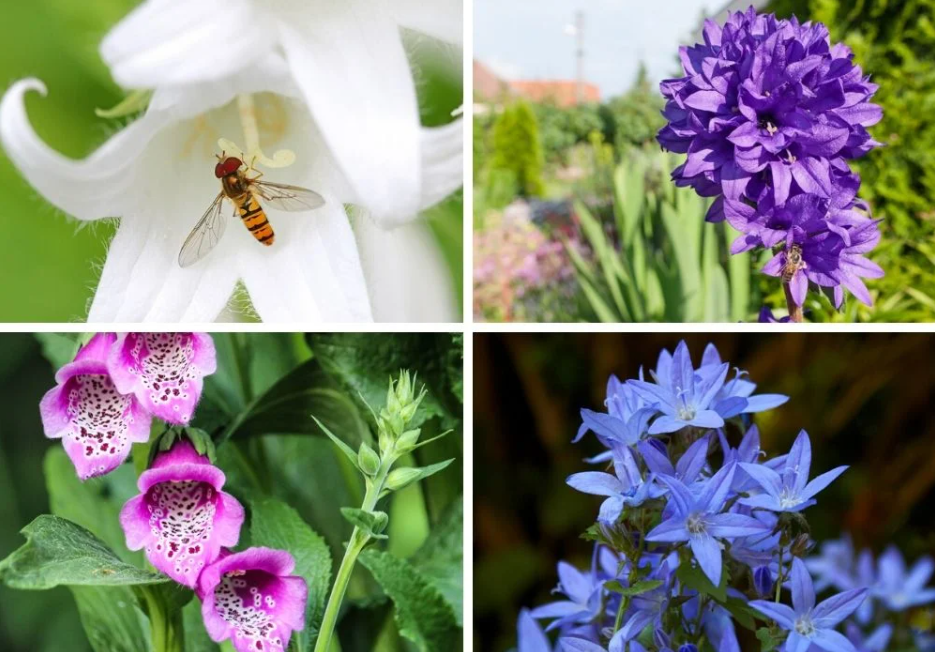
Foxglove (Digitalis purpurea) is a delightful addition to any garden, with its bell-shaped flowers and brilliant colors. These beautiful flowers come in a variety of colors, including purple, white, yellow, red and pink flowers.
Foxgloves are relatively easy to care for, making them an excellent choice for beginning gardeners.
The plants bloom best in full sun, but they will also tolerate partial shade.
Foxglove flowers are deer and rabbit resistant and attract bees and butterflies, making them an excellent choice for wildlife gardens. Foxglove can easily regenerate itself, so be sure to deadhead it if you don’t want the flowers to spread. It’s also important to note that foxglove is toxic to humans and animals if ingested, so be careful when placing them in areas where children and pets play. With tubular flowers that have spotted throats, Foxglove is an absolutely stunning bell-shaped flower variety that creates quite a dramatic effect with its elongated blooms.
Pink foxglove flowers in a garden. Bell-shaped flower gardens
These flowers are found in red, pink, purple, yellow and white colors. They usually grow in partial shade or full sun. In very hot climates, however, foxgloves require some degree of afternoon shade. Foxglove grows up to 5 feet in a flower bed making the back of a flower bed the perfect place for them to grow. This flower goes to seed itself, so if you don’t want to grow extra plants in your garden, you’ll want to periodically trim dead flower spikes. Foxglove is an easily recognizable plant with large, colorful bell-shaped flowers. Bell-shaped flowers grow on tall flowering spiers. The tubular flowers can be pink, purple, yellow, and white, and many varieties have throat spots. Depending on the variety, foxglove flowers can be tubular, funnel-shaped or traditional bell-shaped.
Foxglove flowers thrive in USDA zones 3 through 8 depending on cultivar. Striking flower spikes produce outward-facing, pastel-colored bell-shaped flowers on the stem, up to 4 feet (1.2 m) tall. Foxgloves are ideal for planting behind beds, foundations or growing along an unsightly fence or wall. This tall classic is quite deer resistant, making it a good candidate for planting on its own merits but also a good companion plant to protect more deer-friendly flowers and foliage.
Looking to grow a deer-resistant bell-shaped flower? Consider putting on some fox gloves.
These perennial and biennial plants comprise about 20 species belonging to the Digitalis genus. Each foxglove plant produces a tall spike covered in numerous tube-shaped flowers.
Most foxgloves are purple or pink, but there are some white and yellow varieties.
If you look inside the bell-shaped flowers of the digitalis plant, you can see a beautiful spotted pattern
Foxglove has medicinal uses, but it is also highly toxic and can be fatal. This fact was recognized by the British physician William Withering who promoted its (careful) use in the 18th century.
The American Association for the Advancement of Science explains, quoting Wareing, “Foxglove, when given in large and rapidly repeated doses. occasional sickness, vomiting, purging, dizziness, confusion, seeing things green or yellow; Increased secretion of urine… slow pulse, even to 35 per minute, cold sweat, convulsions, syncope (fainting), death.”
In short, don’t eat it. And don’t feed them to your pets or your children.
- Zones: 4-9
- Sun: Full
- Water: Water to keep the soil moist
- Soil: Loamy
At four o’clock
Perennial
Four o’clock will delight both your eyes and nose, with fragrant tubular flowers that come in a variety of patterns and colors. Often, you will find flowers of different colors on the same plant. The flowers are tubular, red, pink, or white, 6.5 cm long and 3.5 cm wide with 5 to 6 stamens.
Why Plant Foxgloves in Your Garden?
Foxgloves are deer resistant. Because of their venom, deer know better than to try to eat foxgloves. This makes them one of the best perennials to plant if you want to avoid chewing on your flowers.
You can use them to discourage deer from other plants. For example, you can plant a bunch of them together to form a kind of border, with the plants you want to protect on the other side. You can use them to discourage deer from other plants. For example, you can plant a bunch of them close together to form a kind of border, with the plants you want to protect on the other side. This doesn’t guarantee that the deer won’t just walk right through them, but it’s at least a deterrent.
These tall plants have a dramatic effect. With their long spikes and their large, colorful, bell-shaped flowers, foxgloves make a statement in your garden. They can make a nice backdrop to frame smaller plants in front.
Enjoy unique color gradients. Many foxglove flowers change color as they fade. This means that on the same stalk, you’ll often see a beautiful ombre effect. Foxgloves are a species of flower native to temperate Europe and naturalized in North America. Tall stems can grow between 1-2 meters tall, displaying clusters of tubular purple flowers that extend up the stem. Some foxgloves also appear in pink, yellow, and white varieties.
Common foxgloves are either short-lived perennials or biennials with a lifespan of 2 years that produce an array of vibrant flowers in summer. Their height makes them ideal for planting at the back of a border for some height variation. The bent, tubular shape of the flowers will produce and drop seeds to encourage new growth later in the plant’s life cycle. Foxgloves prefer to grow in full sun to partial shade (especially when grown in warm climates). These self-seeders prefer deep watering once a week in well-draining soil.
Cultivars to consider
Alba: This is a type of foxglove with white flowers.
Candy Mountain: The flowers on this cultivar start out pinkish-pink, and then darken to purple. Fox: This type of fox glove has white, cream and pink flowers.
Camellia: Up to 4 feet tall, this cultivar features white, pink, and purple flowers.
Apricot: This cultivar includes unique shades of apricot and cream.
Bells of Ireland (Molucella laevis)
Bells of Ireland (also known as shell flower) is a tall flowering plant that looks somewhat like a fox’s glove. Despite the name, the bells of Ireland are native to the Caucasus, Turkey and Syria. According to the language of flowers, the bells of Ireland plant is a symbol of luck, hence the reference to Ireland.
They are fast growers that grow up to 1 meter tall, exhibiting a dense cluster of flowers that cover the entire stalk. The flowers themselves are white and small, and have pale green calyces, which are basically large petals or leaves. Because of the bent tubular shape of the flowers, these plants are self-seeders.
Bells of Ireland look especially good cut (and even dried) in the back of a border or in a floral arrangement. They prefer heavy watering in humid, hot climates.
Hollyhock
Two years
A staple of cottage gardens, hollyhocks (Alysia rose) are towering flowers that bloom in a wide range of colors long into summer. Hollyhocks are available in a variety of colors, including yellow, white, red, purple, pink, blue, and even black.
Persian lily
Deep burgundy red bell-shaped Persian lily flowers
The Persian lily is another tall and striking bell-shaped flower selection. They come in many different colors than the pale pinks and purples that are common in this type of flower.
If you like foxgloves, another type of bell-shaped flower you might enjoy growing is the Persian lily, a plant with the scientific name Fritillaria persica.
Mature stems can reach a height of about 3-4 feet, and can bear up to 30 flowers. The flowers are bell-shaped, and gently droop downwards.
Bloom colors can include green, ivory, deep red, and deep purple. Lake Fochgluth, were tharive in full sun, and hey terrible and resistant to rabbits.
- Zones: 4-8
- Listen: Complete
- Water: Average amount of water
- Soil: chalk, loam, sand
- Lily of the valley is a humble woodland flower native to cool, temperate habitats in the Northern Hemisphere. These flowers grow quite quickly, which is why they are generally considered an invasive species in North America. Lily of the valley flowers are notoriously poisonous to human and animal consumption.
- These herbaceous perennials produce a race of small, white bell-shaped flowers that usually hang to one side, causing the plant to droop. They will bloom in late spring, producing a lovely sweet fragrance. This fragrance makes them ideal for growing along paths and hanging baskets. After flowering, they produce red berries.
- Lily of the valley is best planted in the fall to establish proper growth before the dormant season. They need partial shade and moist, well-drained soil.
Japanese Primrose
The tree
Japanese primrose is called sakurasu in Japan because of its resemblance to sakura, the cherry blossom tree. The leaves of Japanese primrose have a pink arrangement. The hairy petiole is 1.4-4.7 inches long. It is a symbol of first love, youthful love, and longing in Japan.
Why plant Persian lilies in your garden?
Deer and rabbits are unlikely to try and eat them. Hopefully they won’t be harassed throughout the season.
Persian lilies can feature amazing and unusual colors. These are colors that you won’t normally find on many other flowers.
Perennial flowers are long and dramatic. Persian lilies can draw the eye from your entire garden, and can complement other smaller plants beautifully.
Cultivars to consider
Adiaman: This type of Persian lily is one that produces deep purple flowers. These flowers are actually so dark they are almost black.
Ivory Bells: Initially these bell-shaped flowers are green, but over time, they turn ivory, hence the name.
Kaffir Lily
Perennial
The kaffir lily (Clivia minata) really knows how to put on a show – its bright bud display is a wonderful harbinger of spring. Prominent funnel-shaped blooms are produced in umbel-shaped flower heads, colored yellow, red or orange.
As the name suggests, bellflowers are known for their distinctive bell-shaped flowers. The Campanula genus contains about 500 bellflower species found in the Northern Hemisphere, most of which are distributed in the Mediterranean region.
Bellflowers can come in a variety of heights and colors, including dwarf and tall ones that grow in meadows. In most cases, a bellflower consists of panicles of flowers that bloom on a single stem, characterized by five straight pointed bell-shaped petals. The most common colors are lilac, blue, pink, and white.
Stinky hellebore
Stinking hellebore (Helleborus foetidus) is a bell-shaped flower native to Europe. This plant produces a strong odor when its leaves are crushed or damaged, as the name suggests. But don’t let the scent deter you from adding this beautiful bell-shaped flower to your garden!
Stinky Hellebore has pale green bell-shaped flowers and this evergreen has red stems, finger-like leaves and flower stalks. It likes partial shade and well-drained soil and is drought tolerant once established. It is also found to be deer resistant. It is a slow-growing plant that is often found in clumps or clumps.
It blooms very early in the spring, often before the last frost. Propagate by seed or root division in fall or spring.
It is toxic to humans and animals if ingested, so handle with care.
Passion flower
Passionflower, (genus Passiflora), also passionflower, a genus of over 500 species of mostly tendril-like vines and their characteristic flowers. Most species are found in the neotropical regions of the Americas. Some are cultivated as ornamentals, while others are grown for their edible fruits. Many important larval hosts for butterflies are plants. The passion flower bloom varies from shallow saucer-shaped to a long cylindrical or trumpet-shaped tube, with five sepals, five petals, and numerous filiform or membranous outgrowths from the tube at its upper border. , which is most prominent and beautiful. A part of the flower, called the corona. From the base of the inner part of the tube arises a stalk with a ring of five stamens (the male pollinating structure) at the top. Above the stamen is the female structure, or ovary, at the top of which three large spreading styles are produced. Each style ends in a button-like stigma, which looks like a large-headed nail. Flowers can be small, like passionflower (Passiflora suberosa), or large and showy. The ovary, with a single capsule, contains numerous seeds arranged in groups of three and ripens into a berry-like or capsular fruit.
White Mountain Heather (Cassiope mertensiana)
White Mountain Heather is a cold hardy low growing evergreen shrub with white and red bell flowers.
White mountain heather has small white bell-shaped flowers growing on leathery leaves. The small white flowers are characterized by reddish markings where they attach to the plant. This contrast of bright reds with pure whites against dark green foliage lends visual appeal to low-growing shrubs.
Also known as western moss heather and arctic white heather, this plant is extremely cold hardy. The subalpine plant thrives in full sun or full shade. Short, snake-like bright green stems bloom with bell-shaped flowers that hang and face downwards.
Major species
Wild passion flower, passion vine, or mapop (Passiflora incarnata) grows about 3 to 9 m (10 to 30 ft) tall and bears pink and white flowers about 4 to 7.5 cm (1.5 to 3 in) across. are edible as yellow berries. . Fruit about 5 cm long. Yellow passion flower (P. lutea) is a small plant with greenish-yellow flowers and purple fruits.
Passionfruit
Some highly aromatic passion fruits are eaten as delicate sweet fruits, such as the giant granadilla (P. quadrangularis). Purple passion fruit, also known as purple granadilla. or maracuyá (P. edulis), and the yellow granadilla, or water lemon (P. laurifolia), as well as the wild passion flower, are grown extensively in tropical America for their fruit. P. maliformis is the sweet calabash of the West Indies. These fruits are usually no larger than a hen’s egg, but the fruit of the giant granadilla is similar to a gourd and can weigh up to 3.5 kg (about 8 pounds).
Orange bell lily
The orange bell lily is a native plant with reddish bell-shaped flowers that grows in grasslands and meadows. The wild plant is identified by its long leaf growth with orange-red flowers emerging from the ends of the stems. Unfortunately, orange bell lilies are difficult to propagate and are not commonly used in garden landscapes.
The orange bell lily is on the endangered list of native plant species. It typically grows in open grasslands and hilly areas in USDA zones 4 and 5. Other bell-shaped flowers
In addition to white, purple and red bell-shaped flowers, other types of ornamental plants also have beautiful flowers of different colors. Here are some colorful plants with bell-shaped flowers, including yellow bell-shaped flowers.
Coral Bells
Also known as alumrot, coral bells are one of the most spectacular types of bell flowers, well known for their distinctive long flower spikes. These flowers take on some rich shades of white, pink and red and are just the perfect choice for woodland gardens.
Pink coral vine flowers hanging in the sun.
Not only will the color of these bellflowers blow you away, but so will the wide variety of color of their foliage Some heavenly colors like purple, bronze and many others are included. Coral bells bloom from late spring to early summer. They are found growing naturally in forested areas. This is an important thing to keep in mind when growing coral bells in your garden – you need to mimic their natural growth conditions. Coral bells are commonly known for their colorful foliage. However, semi-evergreens also produce slender stems with small bell-shaped red flowers. Clusters of conical flowers emerge in spring as pale pink to reddish-pink flowers that grow on dark red stems. These panicles can grow up to 13 inches (32 cm) above the colorful evergreen foliage.
Coral bells are ideal ground cover plants for part sun to part shade. Clumping perennials or evergreens (depending on climate) thrive in USDA zones 4 through 9. Plants with variegated leaves can be red, yellow, chartreuse, deep purple or coral red. The colorful plants are 1 to 2 feet (30 – 60 cm) tall and wide
Coral bells (Heuchera Americana) are the world’s perennial calluses. At first, these plants came with small, unusual flowers in soft colors. They are now available in a wide range of colors, with some varieties cultivated expressly for their flowers. The small, greenish-white flowers are borne in airy, open panicles on slender, threadlike stems that extend well above a mound of leaves, usually in late spring and early summer 18- 24 inches high. Looking for a beautiful perennial that also works as a beautiful cut flower? Grow coral bells for interest and color.
Coral bells, also commonly called “alumrot”, are plants of the Heuchera genus. There are about 37 species in the genus, and there are many beautiful varieties to consider for your garden.
Colorado State University writes, “Coral bells (hatchera) are familiar and popular perennials because they adapt to different exposures and blooms. Varieties of this reliable plant grow well in sun, as well as partial or full shade, and are mostly hardy to 8,500 feet. Coral bells aren’t just coral anymore. This perennial produces white to amber to purple flowers. Panicles of small flowers on stout, wiry stems emerge from the foliage in late spring or early summer. The flowers make excellent cut flowers for bouquets.
- Zones: 4-9 (various)
- Sun: Full Partial
- Water: 1 inch per week, extra in full sun
- Soil: Moist, rich, well-drained
Why Plant Coral Bells in Your Garden?
It’s not just the bell-shaped flowers that make coral bells attractive—they also make for stunning foliage. In fact, many gardeners plant them extensively to enjoy their spectacular foliage.
The variation in form from one cultivar of coral bells to another can be striking (in terms of leaves and flowers alike).
Coral bells are highly recommended as companion plants to a wide variety of other flowers. Butterflies and bees find coral bells attractive.
You can often grow coral bells regardless of your sun/shade conditions. You just need to choose a cultivar that suits the amount of sun you have available.
Problems related to diseases and pests are not so common.
The leaves are evergreen. This means you get to enjoy it all year round.
Eustoma grandiflorum
Two years
Often preferred by floral designers when the perfect flower for an arrangement is needed, Eustoma grandiflorum is the epitome of a versatile and charming flower. Broken petals and beautiful buttons are available in different colors. They are available in different colors: pink, purple, blue and white, as well as two-tone combinations of these shades.
Cultivars to consider
Shanghai Heuchera: Purple leaves, dark stems and white flowers create a breathtaking contrast with this cultivar of coral bells. Indeed, viewed from the top down, the white bells look like a constellation of tiny stars against a purple background.
Stainless Steel Heuchera: The name “Stainless Steel Heuchera” refers to the silvery appearance of the leaves of this cultivar. If you flip the leaves over, you will see that they have an eggplant color underneath. The veins running through the leaves are also purple. Flowers are white, beginning with pink buds. It is recommended that a “stainless steel” type be used in the shade. Dolce Blackberry Ice Heuchera: For shockingly dramatic color, consider the “Blackberry Ice Heuchera” plant. The variegated purple leaves of this cultivar are reminiscent of the rich colors of blackberries (though not quite as deep). It can handle a wide range of sun and shade conditions and produces yellow flowers.
Citronelle Heuchera: Large, sharp, green-yellow leaves characterize “Citronelle Heuchera”. How yellow or green they are depends on how much sun or shade they get. If you want a more chartreuse color, go with the shade. If you lift the leaves of these plants and look at the underside, you will see that they are silver. The flowers have a color that can be described as “creamy”.
Dolce Cherry Truffles Heuchera: Prefer coral bells that feature more reddish leaves? Dolce Cherry Truffles Heuchera variety may suit you. The pale pink flowers make a nice contrast with the dark foliage.
Ginger El Hechira: The ginger color of the leaves of this plant gives it the name “Ginger El Hechira”. Flowers are yellow and pink. Consider planting it with something with darker leaves, maybe a different type of coral vine plant like blackberry ice. A contradiction will arise between them. Both have more prominent leaves in your garden.
Glitter Heuchera: One of the most attractive types of coral bells that you can choose for your garden is the Glitter Heuchera. The leaves have a shiny, silvery sheen and dark, prominent veins. The pink flowers are more prominent than other coral bells, so if bell-shaped flowers are your main reason for planting these perennials, you’ll probably like this cultivar.
Lime Ruffles Heuchera: The name “Lime Ruffles Heuchera” refers to the ruffled shape of this cultivar’s lime green leaves. Flowers are white. If you need a variety of coral bells that can withstand heat, you may have better luck with this variety than some others.
Obsidian Heuchera: Not surprisingly, this cultivar of coral bells has rich, dark foliage. Although the leaves may be described as “black,” they are more appropriately dark reddish-purple. Because the flowers are white, they present a stark contrast. Amber Waves: Plant “Amber Waves” in your garden, and you can look forward to amber waves of leaves. It’s like having a little autumn in your yard all the time. The flowers of this type are pink.
Midnight Rose: One of the most interesting varieties of coral bells is the “Midnight Rose” cultivar. Deep reddish leaves are speckled with bright pink. The flowers are a creamy white color.
Viking Bellflower
This is another amazing variety of bell shaped flowers. It is known for its upright spikes of hanging bells in a combination of mauve and lavender shades. This flower is also known for its brilliant purple color which makes your garden look fresher and livelier than ever. Viking Blefluvirs require little maintenance. Yet it’s also low-friction, making them ideal squares for your neck.
Epigaea
Epigaea is a native forest shrub in the Ericaceae family that grows as an evergreen carpet in forests and peat clearings. Epigaea is native to eastern North America and is the only member of the genus. Epigaea flowers are dark pink, light pink or white.
Korean Bellflower
It is a wonderful native of Korea. It blooms in some of the most beautiful colors and shades, including rich, dark and royal purple. Korean bellflowers look so beautiful with their long bell-shaped petals hanging upside down in a cluster of bright green foliage. The Korean bellflower is also often called the ‘Elizabeth’ bellflower. It starts growing in early summer and continues to grow until fall. The flowers are 2-3 inches long and give off a very subtle, light fragrance.
Penstemon
Penstemon are hardy perennial flowers that grow best in full sun.
There are many different varieties of Penstemon ranging in height from 6 inches (15 cm) to 5 feet (1.5 m).
Penstemon’s bell-shaped blooms come in a variety of colors and are great for attracting butterflies and hummingbirds to the garden.
snowdrops
As the name suggests, snowdrops are hardy perennials that are extremely frost tolerant and typically bloom in late winter and early spring. Snowdrop is actually a genus of about 20 species, native to all of Europe and the Middle East and naturalized virtually everywhere.
These are small flowering plants that are usually only 3-6 inches tall, which is why they are usually planted at the edge of the border. They produce drooping, pure white bell-shaped flowers, often with hints of green or yellow depending on the species. Snowdrops are planted in early fall, but are known to take a few years to establish and mature. These hardy flowers can bloom even in snow, so they can be planted anywhere in the garden.
Doghobble (Leucothoe)
Coastal doggobel (Leucothoe axelris)
Dogwood is an evergreen shrub with clusters of delicate white bell flowers for both full sun and shade.
Doghobble is an ornamental evergreen shrub with drooping clusters of ivory-white bell-shaped flowers. These attractive, fragrant flower clusters bloom in spring, forming conical cascading clusters up to 3 inches (7.5 cm) tall. In winter, the small shrub maintains its visual appeal when its evergreen foliage turns bronze or purple. The white-flowered dogwood is 2 to 6 feet (0.6 – 1.8 m) tall. You can grow the shrub as a flower hedge, accent plant, foundation plant, or specimen plant. It thrives in USDA zones 4 through 6 and requires well-drained soil.
Plants with purple bell-shaped flowers
Many plants have purple bell-shaped flowers. These lilac, blue, mauve, or purple flowers make an attractive floral display as they contrast with green foliage. Here are descriptions and photos of some of the most stunning flowers with small bell-shaped flowers.
Japanese Pieris
japanese Pieris is an evergreen ornamental shrub with large drooping clusters of small pinkish-white bell-shaped flowers. Bright white flowers bloom in late winter or early spring with their pointed urn shape and appear on arching stems. These showy panicles can grow up to 6 inches (15 cm) long.
Dwarf varieties of Japanese Pieris are ideal ornamental shrubs for the front of the house. Shade-loving shrubs do best in USDA zones 4 through 8. And the dwarf shrub Pieris japonica ‘Cavatine’ grows to just 3 feet (1 meter) tall. Japanese pear is also known as lily of the valley bush because of the strikingly similar white bell-shaped flowers. Other names for the slow-growing flowering shrub are Fetterbush and Japanese Andromeda.
Mountain Laurel (Calmia latifolia)
Mountain laurel, also known as calico bush, is an attractive flowering shrub that produces many small white bell-shaped flowers.
They grow best in partial shade and can reach 5 to 15 feet (1.5 to 4.5 meters) in height and width.
Mountain laurel shrubs grow well in the same areas as azaleas and rhododendrons.
Grass pink
Related Topics: Carnation Sweet William Feathered Gully Flower Meadow Pink China Pink
Dianthus, (genus Dianthus), a genus of about 300 species of many flowering plants in the Dianthus family (Caryophyllaceae). Almost all are native to the Eastern Hemisphere and are found mainly in the Mediterranean region. Many are cultivated as garden ornamentals, and most are suitable for rock
Persian butter cup
Related Topics: Common Water Croft Long Meadow Buttercup Turban Buttercup Swamp Buttercup Pond Croft
Buttercup, (genus Ranunculus), also called Crowfoot, a genus of about 300 species of herbaceous flowering plants in the family Ranunculaceae. Buttercups are distributed throughout the world and are especially common in the forests and fields of the northern temperate zone.
Physical description
Sagebrush Buttercup
Most buttercups have tuberous or fibrous roots. The flowers are solitary or in loose clusters and have five green sepals, five to several bright yellow (sometimes white) petals, and multiple male and female structures (stamens and pistils). Cultivated varieties have been bred into many colors. Leaves are highly variable depending on the species.
Major species
Butter cup of yellow water
Persian buttercup (Ranunculus asiaticus) is the florist’s ranunculus. Among the many wild species is the tall grass buttercup (R. acris), which is native to Eurasia but widely introduced elsewhere. swamp buttercup (R. hispidis) of the wetlands of eastern North America; and the Eurasian creeping buttercup, or butter daisy (R. repens), which has become widely naturalized in the Americas. Pond croft (R. peltatus) and common water croft (R. aquatilis) both have broad floating leaves and finely cut submerged leaves.
Major species
Sweet William
Especially noteworthy are the fragrant flowering grass, or cottage, pink (Dianthus plumarius); Marriage, or meadow, pink (D. deltoides); and the rainbow, or chin, pink (D. chinensis). Other important plants of the genus Dianthus are sometimes called roses. For example, the popular carnation (D. caryophyllus) is often called a clove rose for its spicy fragrance, and the sweet william (D. barbatus), a garden favorite, is often called a bunch rose.
Physical description
Carnation
Roses are mostly small herbaceous perennials, many of which are tufted or mat-forming hardy evergreens. There are also some annual forms. The small but showy and often fragrant flowers are mostly pink to deep rose, with some red, purple, white or yellow. Both annual and perennial Dianthus species can be grown from seed sown in spring in normal moist garden soil in a sunny location. Perennials will bloom the following summer and can be propagated by cuttings or division of clumps.
Transform your garden with bell-shaped flowers!
The bell shaped flowers are really very rich and exotic. They literally help brighten up any and every garden. Bellflowers are widely unique and universal favorites for their rich and vibrant colors and overall pleasing aesthetics due to their drooping, drooping and drooping form. If you plan to plant any of these vine flowers in your garden, be sure to do proper research on their growing needs, water and sunlight requirements, and other important factors.
Each flower comes with different requirements, and these must be met in order to have a stunning, dreamy garden with the most beautiful bell-shaped flowers that create the perfect contrast against the deep green, vivid foliage!
Canterbury Bells
It is an absolute bell-shaped flowering variety, mainly because of its beautiful clusters of pink bell flowers. The color of Canterbury Bells is simply unique and a treat to the eyes. This flower is quite easy to grow but requires some care and maintenance. Hummingbirds, bees and butterflies also love Canterbury bells, admiring their large, showy flowers that look like dangling bells at first and later open into the most beautiful cup-shaped blooms. The color of these flowers can range from white to pink to blue to purple.
Daffodil
Most of us have seen or at least heard of Daffodils, and for all the right reasons too! Daffodils are another wonderful variety of bell-shaped flowers. They exhibit a bright, vibrant, cheerful appearance thanks to their brilliant yellow color. Daffodils are the ultimate symbol and herald of spring. This flower is known as an autumn-planted bulb, which suggests that the best time to plant it is in the fall, giving the flowers plenty of time to bloom in late winter or early spring. This flower is ideal for planting in the garden or even as a border between shrubs. They look fantastic in woodland gardens as well as large trees. Yellow daffodils are just one type of this flower. You’ll find many other daffodil color options, including white, peach and even bicolor. Daffodil (Narcissus pseudonarcissus)
Daffodils are bright, cheerful flowers that bloom in late winter or early spring.
Bulbs should be planted in fall and look best planted in bunches in the garden.
There are many different varieties of daffodils to choose from, including the standard yellow, orange, peach, white and bicolor. Daffodils bloom in their trumpet shape in spring and nature’s awakening. They are one of the few plant species that can grow successfully in snow. Daffodils are usually golden in color. However, there are new varieties of daffodils in pink, green, orange, yellow and white colors.
Symbolism
Purple passion flourishes
The blooming of the passion flower, especially the purple passion fruit flower (P. edulis), is often used to symbolize the events of the final hours of Jesus’ life, the Passion of Christ, which Causes the name of the group. Thus, the corona represents the crown of thorns, the style represents the nails used in the crucifixion, the stamen represents the five wounds, and the five sepals and five petals represent the 10 apostles. All except Jesus, who sat with Jesus. Peter, he was the knight who tempted Jesus three times.
Cape Tulip
Cape tulip, also known as bloodlily, any plant in the genus Haemanthus of the family Amaryllidaceae, which includes about 50 species of ornamental herbs native to South Africa. Most species have dense clusters of red flowers and broad, blunt leaves that are grouped at the base of the plant.
Snake head fritillary
Purple snakehead flowers in the garden.
It is one of those unique, unblemished and erect bell-shaped flowering varieties with purple and pink nodding checkered flowers that look like a snake’s head which is the main reason for its specific name. Initially, the flower resembles a snake’s head, but over time, it finally blossoms into a magnificent bell shape.
Narcissus
narcissus, (genus Narcissus), a genus of about 40 species of bulbous, often fragrant, plants in the amaryllis family (Amaryllidaceae). This genus is primarily native to Europe and includes many garden ornamentals such as the daffodil (or trumpet narcissus, Narcissus pseudonarcissus), jonquil (N. jonquila), and poet’s narcissus (N. potax). . The bulbs of Narcissus species, which are poisonous, were once used medicinally as emetics and cathartics. The oil of jonquil flowers is used in perfumes.
Some species have white flowers. Some species are variously known as the Natal paintbrush, Catherine whale, giant paintbrush, and African bloody. Most species are perennial and emerge from bulbs in spring. Flattened leaves emerge from the base of the plant and range from 5 cm (2 in) to 1.2 m (4 ft) in height, depending on the species. The central crown of each yellow, white or pink flower varies from trumpet-shaped in the daffodil, to a ring-shaped cup, as in the poet’s narcissus. Some species hybridize in the wild, and many horticultural crosses between species result in attractive garden hybrids.
Spring snow
Spring snowdrop (Leucojum vernum) is a white bell-shaped flower that blooms in early spring. It is a bulbous perennial native to Europe and Asia. Bell-shaped drooping flowers display white petals with yellow pointed parts.
This plant prefers moist, well-drained soil and does best in full sun to partial shade areas. But it will tolerate swampy conditions and clay soils.
Spring snowdrops should not be confused with snowdrops, which are a different species of plant. These flowers are found in red, pink, purple, yellow and white colors. They usually grow in partial shade or full sun. In very hot climates, however, foxgloves require some degree of afternoon shade.
Foxglove grows up to 5 feet in a flower bed making the back of a flower bed the perfect place for them to grow. This flower goes to seed itself, so if you don’t want to grow extra plants in your garden, you’ll want to periodically trim dead flower spikes.
Diasia
Annual/Perennial
Diascia, sometimes called twinspur, is favored for its spring flowers in a range of beautiful colors, including white, orange, coral, lavender and pink. A small nesting plant that looks wonderful in front of flower beds and garden borders. During flowering, a racemose apical flower is formed, consisting of salmon, purple, white, orange, pink, or other colored flowers.
Twin Flower (Linnaea borealis)
Twin flower (also twin bee) is an evergreen ground-hugging plant with pendulous pink bell-shaped flowers. The name of the plant comes from the fact that the small flowers grow in pairs at the ends of slender stems. Each slender flower is 0.28″ to 0.47″ (7 – 12 mm) long and pale pink in color.
Additional identifying features of twin bee plants are their hairy stems, ovate evergreen leaves with shallow lobes, and small opaque seed capsules. The double flower is usually 3″ to 6″ (7.5 – 15 cm) long.
Cardinal
Perennial
Basic flowers grow well as solitary plants in natural landscapes, mixed flower beds and borders. The Lobelia genus includes 60 different types of flowers, primarily blue bell-shaped flowers in loose clusters or spikes.